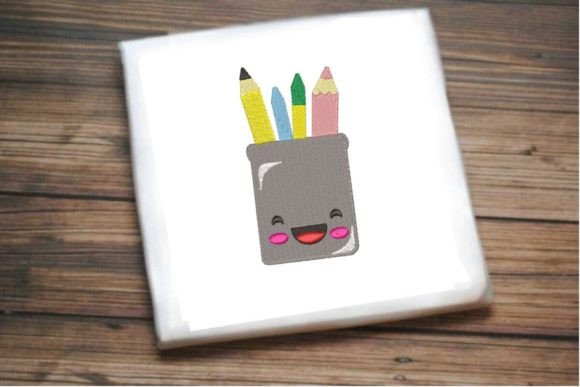
Smiling Pen Set Embroidery Review
As a designer who spends half my life staring at digitized files and the other half troubleshooting stitching errors on the machine, I approach every new embroidery file with a mix of optimism and skepticism. We have all seen designs that look perfect in a digital preview but turn into a tangled mess once the needle starts moving. That is why I take a practical, hands-on approach when evaluating a machine embroidery design like the Smiling Pen Set. This isn’t just about whether it looks cute; it is about whether it functions as a viable asset for your craft business, your Etsy shop, or your personal gift-making projects.
The Smiling Pen Set falls squarely into the Back To School category, but dismissing it as merely "school-themed" would be a mistake. The design features a delightful ensemble of smiling pens arranged neatly in a charming bowl. It has a specific visual personality—whimsical, organized, and cheerful. For those of us creating custom apparel or personalized gifts, understanding that mood is critical. Does this design fit a serious corporate logo? No. Does it fit a teacher appreciation gift, a student planner cover, or a boutique school supply bag? Absolutely.
First Impressions and Visual Personality
When you first load the embroidery file onto your screen, the layout strikes you as balanced. The arrangement of the pens suggests order and creativity, which are themes that resonate strongly with educators, students, and creative entrepreneurs. The characters—the pens themselves—are given faces, adding a layer of charm that elevates the piece from simple iconography to a character-driven illustration. This level of detail requires careful digitizing. If the eyes or smiles were poorly placed, the entire design would feel uncanny rather than cute. In this case, the facial expressions appear crisp and intentional.
The color palette implied by the description suggests a variety of hues, which is excellent for visual interest. However, as a reviewer, I must note that the success of this thread colors combination depends heavily on your fabric choice. The contrast between the pen bodies, the bowl, and the background will dictate how legible the design is after stitching. It feels like a design meant to pop, making it ideal for light-colored backgrounds where the details can breathe.
Real-World Application: Where Does It Shine?
I often think of embroidery designs not as static images, but as components of a larger product ecosystem. So, where does the Smiling Pen Set fit best? Let’s look at some real-life scenarios.
- Teacher Appreciation Gifts: This is perhaps the strongest use case. A tote bag embroidered with this design makes for an instant, thoughtful gift. It signals professionalism mixed with warmth. It works beautifully on canvas totes, aprons, or even high-quality notebooks if you have the right hoop size.
- School Supplies and Accessories: Imagine this on a pencil case, a backpack patch, or a set of kitchen towels for a teacher’s home. The theme bridges the gap between work and home, making it versatile for personalized gift markets.
- Baby and Nursery Decor: While clearly school-themed, the soft, smiling nature of the pens translates well to nursery items. On a baby blanket, a onesie, or a nursery wall hanging, the design takes on a softer, more innocent tone. It fits perfectly into the growing market for baby embroidery that avoids overly generic shapes in favor of character-driven art.
- Etsy and Small Shop Merchandise: For the Etsy seller looking to capitalize on back-to-school season, this design offers a unique angle. Instead of another apple or book design, you are offering something with personality. It stands out in search results because it tells a story.
Technical Performance and Stitching Considerations
Looking at the design structure, the arrangement of multiple pens within a bowl likely utilizes a mix of stitch types. You can expect satin stitch for the outlines of the pens and the bowl rim to give them definition. The bodies of the pens might use fill stitch for solid color coverage, while small details like eyes or highlights could rely on running stitch. This mix is standard for this type of illustrative design, but it raises questions about stitch density.
If the fill stitches are too dense, the fabric may pucker, especially on lighter materials. Conversely, if they are too sparse, the underlying fabric texture might show through, ruining the clean look of the pen bodies. As a designer, I always recommend checking the stitch density in your software before committing to production. If the design feels heavy, consider using a cut-away stabilizer for woven fabrics to ensure stability without distortion.
Another technical aspect is the hoop size. Designs featuring multiple objects, like a group of pens in a bowl, require enough space to avoid crowding. If you attempt to shrink this design significantly to fit a tiny cap logo, you risk losing the facial expressions entirely. The details become muddy, and the "smiling" aspect turns into ambiguous blobs. Therefore, respecting the original hoop size recommendations is crucial for maintaining the design’s integrity.
Fabric and Surface Limitations
Not every surface is created equal. While the Smiling Pen Set is charming, it demands certain conditions to look its best. Here is where you need to be cautious:
- Textured Fabrics: Avoid placing this on heavily textured fabrics like chunky knits or terry cloth. The fine details of the pen faces will get lost in the weave. Smooth cottons, linens, or blends are far superior choices.
- Stretchy Materials: If you are working with stretchy jersey or spandex blends, you must use a stabilizer that matches the stretch. Otherwise, the circular shape of the bowl may distort into an oval during stitching.
- Small Hoops and Curved Surfaces: Applying this to a curved surface like a baseball cap can be tricky. The bowl’s symmetry might look off if the fabric curves sharply across the center. Test on a scrap piece of the same material first to see how the perspective holds up.
- Dense Stitch Areas: If the design includes large areas of solid fill, be mindful of the fabric weight. Thin fabrics may show the stiffness of the underlay stitches from the reverse side, affecting the drape of the final garment.
Design Value and Customer Perception
In the world of handmade products, perception is everything. A well-executed embroidery design builds trust. When a customer sees the Smiling Pen Set stitched cleanly, with no loose threads and clear details, they perceive higher value. It signals that you care about quality. This is particularly important for commercial embroidery projects where you are selling finished goods. A sloppy execution can undermine even the best design concept.
Furthermore, the thematic clarity of this design aids in marketing. It is instantly recognizable as related to writing, learning, or organization. This reduces the cognitive load for your buyer—they don’t have to guess what the image represents. For printable mockups and digital previews, this clarity helps drive sales. Customers can visualize exactly what they are getting, which reduces returns and increases satisfaction.
Practical Designer Notes for Success
Before you rush to produce a batch of handmade products featuring the Smiling Pen Set, follow these professional steps to ensure a smooth workflow:
- Test on Scrap Fabric: Never assume a design will stitch out perfectly on your final material. Always run a test on a scrap piece of the exact fabric and stabilizer you plan to use.
- Check Color Contrast: View your design in black and white mockup mode. This helps you assess the contrast between the thread colors and the fabric. If the design lacks contrast, it will look flat and indistinct.
- Inspect Small Details: Zoom in on the digital file. Are the eyes distinct? Is the smile clear? If any part of the design looks thin or fragile, consider adjusting the stitch length or removing unnecessary elements.
- Verify Licensing: If you intend to sell finished items, confirm the licensing terms of the digital embroidery file. Some designs are for personal use only, while others allow commercial sales. Respecting intellectual property protects your reputation and your business.
- Choose the Right Stabilizer: Depending on your fabric, select a tear-away, cut-away, or wash-away stabilizer. The wrong choice can lead to puckering or visible residue on the back of your project.
The Smiling Pen Set is more than just a cute image; it is a functional tool for designers and makers. It captures a specific mood that resonates with teachers, students, and anyone who appreciates a touch of whimsy in their daily routine. By paying attention to fabric selection, stitch quality, and proper testing, you can transform this embroidery project into a standout piece for your portfolio or shop. Whether you are creating a one-off personalized gift or scaling up production for small shop product lines, this design offers a reliable foundation for beautiful, meaningful work.